Posts

Cotton spinning system and process

Image
  How to process the disorganized and horizontally closely connected fibers into vertical order and smooth yarn with certain requirements, it is necessary to turn the block fiber into a single fiber state, completely remove the horizontal connection of the fiber raw materials, and establish a strong longitudinal connection between the end and the end. The former is called the loosening of fibers, and the latter is called the collection of fibers. Cotton spinning is the process of using certain systems, processes, equipment and technology to loosen and assemble textile staple fibers into yarns that meet certain requirements. The process of cotton spinning system generally includes raw material preparation, opening, carding, impurity removal, mixing, drawing, merging, twisting and winding. The following is the process description and application. Unprocessed raw cotton——Opening——Carding——Drawing——Roving(flyer)——Ring spinning——Winding——Yarn steaming Ginning Cotton ginning  is the...

Introduction of Jigger Dyeing

Image
Jigger dyeing, a method of fabric dyeing performed on a jigger. The fabric is wound up on one roll of the jigger and passed through the dye bath to the other roll. After rolling, repeat in reverse until the fabric is evenly dyed in the desired color. It is an intermittent production method, suitable for small batch production of many varieties. The basic working process is to repeatedly pass the fabric of a certain length and width through the dye solution of a certain concentration and temperature, and complete a certain number of reciprocations according to the process requirements, so that the dye can be colored on the fabric. Therefore, the process of jigger dyed products is simple. ​Structure and working principle The working principle of the jigger is that two rollers with the same geometric size, including a fabric take-up roller and a cloth release roller, drive the fabric to reciprocate dyeing in the dye liquor tank until the process requirements are met. As the jigger progres...

Combing Process in Spinning

Image
Before processing cotton, wool, and silk fibers into fabrics, the process of removing impurities and short fibers in the fibers with a combing machine is called combing. The texture, washability and durability of the fabric produced through this process are greatly improved compared with carded fabrics. The following introduces the composition of the combing machine and the combing process. The kinematic coordination relationship of the main parts on the combing machine is indicated by a dial. The disc is mounted on the combing machine and rotates synchronously with the cylinder, which is generally called the indexing disc. The index plate is divided into 40 equal parts along the circumference, and each equal part is 9°, which becomes one index. The working cycle refers to the time interval between the combing cylinder of the intermittent combing machine corresponding to the two actions of combing the whiskers. That is: the first row of needles in the combing cylinder goes to the botto...

Carding in Textile and Its Influencing Factors

Image
The essence of spinning is to ensure that the fibers are arranged in an orderly manner along the axial direction. To accomplish this task, carding in textile is the foundation and key. The main task of carding is to decompose the cotton bundle into single fibers and preliminarily complete the work of fiber orientation, while removing nep impurities and some short fibers. Below we will summarize the factors that affect the quality of carding, and conduct a simple analysis. Chemical fiber Among all chemical fibers, the friction coefficient and specific resistance of the fiber have the greatest impact on spinning performance and carding quality. In the process of carding and drafting, the static friction coefficient (Us ) and dynamic friction coefficient (Ud ) of fiber and fiber, fiber and carding element, fiber and drafting element have a great relationship with the effect of carding and drafting. ​Chemical fibers have high specific resistance, and the static electricity generated cannot...

The Complete Guide to Cotton Opener

Image
  What is meant by cotton openers? The primary goal of a cotton opener is to loosen and remove impurities from raw materials. Opening machine raw cotton opening and impurity removal effect process is complementary to each other, the raw cotton loose into small cotton bundle at the same time, so that the fiber and impurities separation, through the mechanical stray part to complete the impurity removal effect. 1. The cotton roll composed of fibers sent by the cotton cleaning process is carefully opened and separated before the fiber is damaged, so that the fiber bundle is separated into a single fiber. 2. Get rid of impurities in cotton rolls, such as broken seeds, seed crumbs, infertility seeds, soft seed skins, dust, non-spinning fibers, fiber bundles that can’t be combed open and fibers adhering to impurities, and have the ability to recover spinnable fibers in the process of removing impurities. Characteristics of cotton opener 1. Use large rolls and several small rolls to rotat...

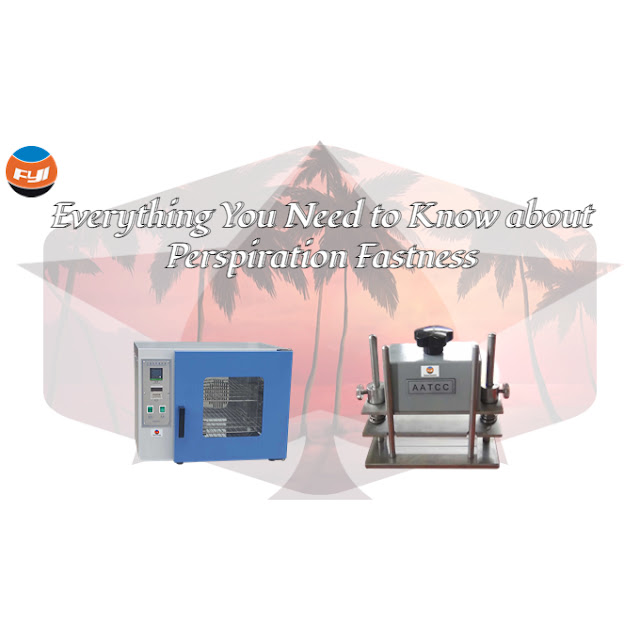
Everything You Need to Know about Perspiration Fastness

Image
  What is perspiration fastness? Perspiration fastness is the degree of color retention of textiles in sweat, which is especially important for clothing products. During daily use, the textile stays in close contact with the skin for a long time. At the same time, contact with the sweat secreted by the skin will have a great impact on some dyes, causing them to transfer from the textile to the skin. Some of the dyes on textiles are not resistant to acid and some are not resistant to alkali. Therefore, during the test process, it is necessary to prepare acid and alkali artificial sweat to simulate the acid-base sweat of the human body. And test the textiles at 37°C to simulate human body temperature, mainly for textiles that are in contact with the skin. The standard of perspiration fastness At present, the common test standards for perspiration fastness mainly include: “Tests for Color Fastness of Textiles Part E04: Color Fastness to Perspiration” (ISO 105-E04: 2008); “Color Fastne...

Light Fastness Standard and Test Method

Image
  Light fastness refers to the ability of colorants and polymer systems to maintain their color when exposed to sunlight. The main reason for the color change of colored products exposed to sunlight is the damage of ultraviolet rays and visible rays in sunlight to colored products. The color fastness to light test refers to a test method for testing the degree of coloration of an object against exposure to light under specific conditions. It is an important data to measure the light fastness of various substances under different exposure environments. In daily engineering technology applications, light fastness is one of the main indicators for judging materials. The most common use of light fastness testing is to measure the light fastness of inks, dyes, plastics, coatings and other materials under exposure conditions. Types of the test method Generally speaking, the light fastness test is divided into two types according to different modes: time exposure mode and uniform exposure...